The commercial construction industry is facing a familiar problem: do more with less. Tighter project timelines, rising labor costs, and an ongoing skilled labor shortage have forced contractors and developers to rethink how they approach structural components.
One solution gaining serious traction? Precast concrete.
While precast has been around for decades, its adoption in commercial and infrastructure projects has accelerated significantly over the past five years. The reason is simple: when time is money and labor is scarce, manufacturing structural components off-site and delivering them ready to install makes economic sense.
The Math Behind the Shift
Traditional cast-in-place concrete requires extensive on-site formwork, curing time, and labor. A single structural element might take days or weeks to complete when you factor in setup, pouring, curing, and stripping forms.
Precast flips that equation.
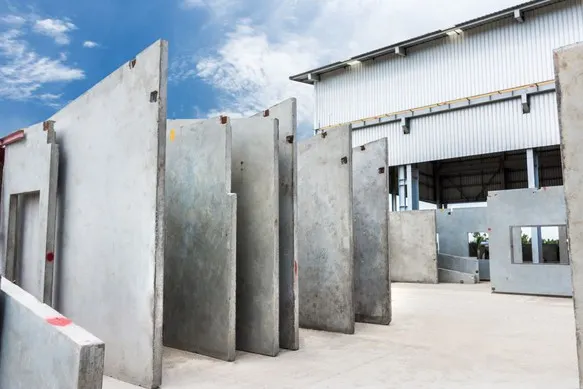
Components are manufactured in controlled factory environments where weather delays don’t exist and quality control is consistent. By the time they arrive on-site, they’re ready for immediate installation. What once took weeks can now happen in hours.
For general contractors managing multiple trades and tight schedules, this predictability is invaluable. Precast components arrive when scheduled, get installed quickly, and allow other trades to begin their work sooner.
Labor Realities Driving Adoption
The construction labor shortage isn’t a temporary problem—it’s a structural shift in the industry. Skilled concrete workers are aging out of the workforce faster than new workers are entering.
Precast manufacturing addresses this in two ways. First, factory environments are easier to staff than jobsites. Climate-controlled facilities and consistent schedules make these positions more attractive to workers. Second, installation crews can be smaller and more specialized, reducing the number of skilled laborers needed on-site.
A wall panel that might require a crew of eight to form and pour on-site can be set by a crew of four with a crane in a fraction of the time. That efficiency compounds across an entire project.
Applications Expanding Beyond Walls and Floors
Precast has traditionally been associated with wall panels, floor planks, and parking structures. But the technology has expanded into more specialized structural applications where precision and durability matter most.
Bridge components represent one of the fastest-growing segments. Precast beams, deck panels, and barrier walls are now standard on highway projects across the country. State DOTs have increasingly specified precast elements to minimize lane closures and accelerate project delivery.
Retaining walls and earth retention systems are another growth area. Projects requiring structural caps to finish walls or distribute loads are turning to solutions like precast concrete caps that arrive ready to install with consistent dimensions and verified load capacities.
Stadium and arena construction has embraced precast for seating risers, raker beams, and structural frames. The ability to manufacture hundreds of identical components off-site makes precast ideal for large-venue projects with fixed opening dates.
Quality Control Advantages
Beyond speed and labor efficiency, precast offers quality advantages difficult to replicate in field conditions.
Factory manufacturing means concrete is mixed, placed, and cured under controlled conditions. Temperature fluctuations, humidity variations, and weather events that can compromise cast-in-place concrete simply don’t apply. The result is more consistent strength, finish quality, and dimensional accuracy.
Testing and inspection happen before components leave the plant. Contractors receive certified documentation confirming each piece meets specifications. For projects with strict engineering requirements, this quality assurance is significant risk reduction.
The Cost Conversation
Precast’s higher unit costs compared to cast-in-place concrete have historically been the primary objection. And on a line-item basis, that objection is often valid.
But construction economics don’t work on line items alone.
When contractors factor in reduced on-site labor, compressed schedules, lower formwork costs, fewer weather delays, and faster building enclosure, the total project cost picture often favors precast. Add in reduced financing costs from shorter construction periods and earlier occupancy, and the economics become even more compelling.
Projects utilizing precast structural systems average 15-20% shorter construction timelines compared to traditional methods. For a developer carrying construction loans at current interest rates, that time savings translates directly to bottom-line impact.
Looking Ahead
The precast industry continues investing in expanded capabilities. Larger components, more complex geometries, and digital tools like BIM integration are advancing rapidly.
For contractors and developers evaluating structural systems, precast deserves serious consideration—not as a specialty solution for niche applications, but as a mainstream approach to commercial and infrastructure construction.
The labor market, project timelines, and quality requirements all point in the same direction. Precast isn’t just an alternative anymore. For a growing number of projects, it’s becoming the default choice.