
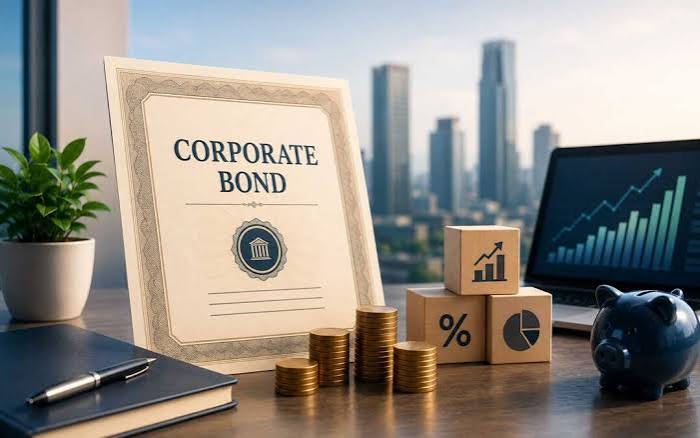
Ask a group of business owners how they would get a million dollars to grow their business and most will say a bank loan first. Fewer will talk about bonds even though the bond markets move trillions of dollars every year and help pay for things like factories and buying other companies. If you have ever wondered how a company can borrow money directly from thousands of people from just one bank, corporate bonds are the answer.
A corporate bond is basically a loan agreement written on paper. A company that needs money issues bonds to investors, promises to pay interest on a schedule and agrees to give back the original amount, called the principal on a set date. Unlike a bank loan the person lending the money isn’t one company. It’s a group of investors from pension funds, to regular people buying bonds, who each own a part of the company’s debt.
The Corporate Bond Market Works Like This
The corporate bond market has two parts. First there is the market. This is where a company sells bonds to investors with the help of underwriters. The company gets the money from these sales. Then there is the market. This is where investors buy and sell these bonds with each other. They usually do this through bond dealers not on an exchange like stocks.
This way of doing things is important because it changes how bonds are priced. When a bond is first sold its interest rate is set. This is called the coupon. After that the bond’s value can change based on interest rates. How well people think the company can pay its debts.
If interest rates go up bonds with interest rates are not as good so their price goes down on the secondary market.. If interest rates go down the opposite happens. The corporate bond market and corporate bonds are affected by these changes, in interest rates and creditworthiness of the company issuing bonds.
Why Companies Choose Bonds of a Bank Loan
Bank loans come with rules, relationship requirements and often shorter time frames. Bonds give a company access to a larger group of money in one go, sometimes hundreds of millions of dollars with time frames that can go past ten years. For a business that has grown beyond what a single lender’s comfortable holding, on its books bonds open the door to large investors who specialize in exactly this kind of long-term lending.
There’s also a money angle. Companies that are considered strong and have financial health can often sell bonds at a lower overall cost than they would get from a bank, especially once the deal is big enough to make the costs of setting up the bond deal worth it.
Main Types of Corporate Bonds
bonds are not all the same. You have secured bonds that are backed by specific company assets. This means the risk for investors is lower and the coupon is usually lower too. Then you have corporate bonds, which are often called debentures. These corporate bonds rely on the company’s promise to pay investors. They usually have yields to make up for the added risk.
There are also corporate bonds. These corporate bonds let investors exchange their debt for company shares. This can be good for growth companies that want to keep their interest costs down. You also have corporate bonds. These corporate bonds give the company the right to repay early if interest rates drop. Then there are yield corporate bonds, which are sometimes called junk corporate bonds. These corporate bonds are issued by companies with credit ratings. They pay interest to make up for the added risk of default.
The Risks Every Investor and Issuer Should Understand
The main risk for bonds is credit risk. If a company’s financial position gets weaker its corporate bonds can be downgraded. In this case the company can default on its corporate bonds entirely. Another big risk is interest rate risk. This is because corporate bond prices move in the direction of interest rates in the market. Liquidity risk is also important. Many corporate bonds do not trade often, especially smaller issues. This can make it hard to sell them quickly without losing money. Finally there is event risk. A surprise event, like a restructuring or lawsuit can change the value of a bond overnight. This can happen even if the company seemed solid the week before.
Structuring a Bond Issuance the Right Way
Getting a bond deal to market is not about paperwork. It involves checking credit, finding the investors discussing prices and creating legal documents that can stand up to close examination. Firms that focus on debt advice, such as bonds, work with companies to create offerings that fit their balance sheet, their plans for growth and what investors want instead of using a single solution for every deal that needs more attention.
A structured issuance also thinks about timing. Putting a bond on the market during a time when interest rates are changing a lot or when investors are not interested can mean paying interest than needed for many years so companies that plan in advance and build good relationships with the right underwriters usually do much better than those that rush the process.
Who Actually Buys Corporate Bonds
investors like insurance companies, pension funds and mutual funds take in most new issues, especially in investment-grade deals. Retail investors can also get involved, either by buying bonds through a brokerage account or more often through bond funds and ETFs that bring together many issuers. For a company trying to raise money, knowing who is likely to buy the deal affects everything from the amount that can be bought to the rules included in the documents, for the offering.
Frequently Asked Questions
What is the difference between a bond and a stock?
The company that issues the bond owes you money and has to pay you back with some extra money, which is called interest. On the other hand a stock is like owning a part of the company. If you own a stock you do not get your money back. You might get some money if the company does well.
Are bonds a safe way to invest your money?
It really depends on the company that issues the bond. If the company is strong and has a lot of money its corporate bonds are usually safe.. If the company is not doing well its corporate bonds are riskier. You might get interest but you also might not get your money back.
How do companies decide how interest to pay on a corporate bond?
The interest rate on a bond is decided by a few things. It depends on how the company is doing, what interest rates are like in the market, when the corporate bond will mature and how much people want to buy the corporate bond. If the company is strong it usually has to pay interest on its corporate bond.
Can a company pay back a bond early?
Only if the corporate bond says it is okay to do. Some corporate bonds have a rule that lets the company pay back the debt early usually with a little extra money. This happens when the company thinks interest rates will go down.
What happens if a company cannot pay back its bonds?
The people who own the bonds have a special right to get their money back before the people who own stocks. If the company has some assets that are promised to the corporate bond owners those assets will be used to pay them first. If not the corporate bond owners will get what they can from what’s left.
