
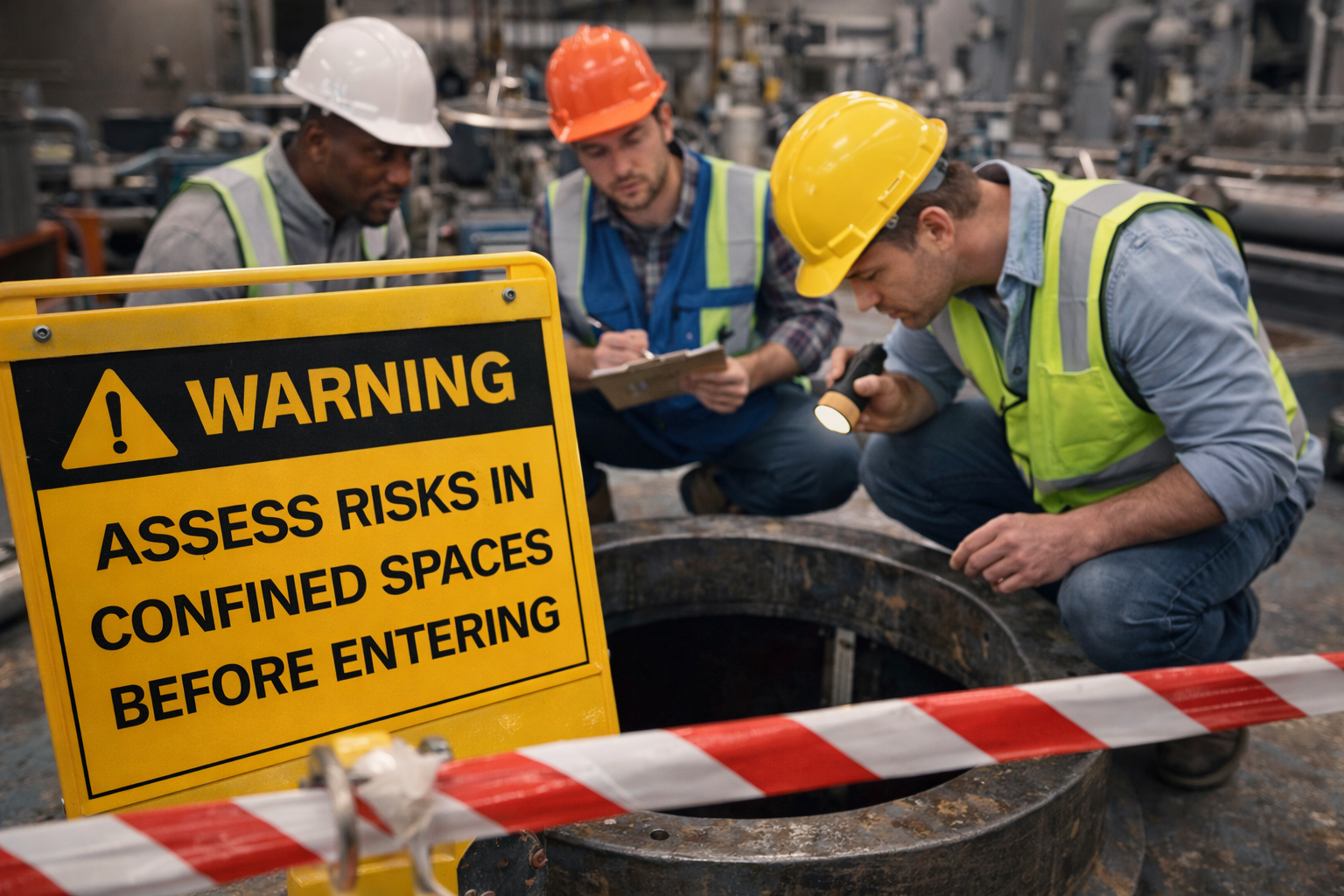
Do your constructors need to work in a confined space? When working in an enclosed area, they have a risk of facing various hazards. Restricted escape routes and low oxygen levels are potential risks for working in confined spaces. So, how will you ensure the safety of your workers?
The most important step is to assess risks in a small, cramped space. Confined space assessment involves identifying hazards and implementing control measures. Your proactive steps will save your workers from a life-threatening environment. Let us provide a guide on how to evaluate risks in a confined area.
Check the steps for evaluating potential risks of working in a cramped space.
Detect The Level Of Risks-
Workers in every industry should avoid entering a confined area. Still, if the entry is unavoidable, employers have to implement a safety system. Expert risk assessors will walk around the worksite and ask about the past accidents. They also expect cooperation from those who work in confined places.
The assessor will focus on various factors, such as-
- Rescue points and entry/exit
- The dimension of the enclosed space
- Risks from different processes
- Contamination
- The presence of any residues
Determine Who Is At Risk-
After detecting hazards, the assessor will identify workers who are at a higher risk. The expert will determine only the type of workers who should be careful in a confined space.
Moreover, assessors consider your business routine and the working environment before making a decision. For instance, some businesses choose the adjacent building for different activities. The risk evaluation team will not overlook this factor during evaluation. You will also receive tips on controlling hazards in a particular place.
Find The Existing Hazards-
The assessment process is not merely about eliminating risks but about understanding the way to manage them responsibly.
Hazards in a confined space are not the same in every industry. In the construction sector, contractors need to work in crawl spaces. They can face various risks, such as
- Inadequate ventilation and suffocation
- Toxic fumes from solvents and welding
- Explosions due to flammable gases emitted from damaged pipes
- Collapsing structures
- Engulfment hazards from loose materials
Manufacturing professionals also work in a confined space that leads to hazards like-
- Suffocation in a nitrogen-filled tank
- Toxic substances, produced from the chemical manufacturing process
- Explosions caused by combustible
- Entrapment risks from moving machinery parts
Record The Findings
Risk assessors will record their findings and recommend ways to manage hazards. Based on the report, you need to take steps to comply with workers’ safety rules.
As an employer, you should focus on your workers’ safety and health.
Conclusion
Before entering a confined space, you should assess risks. It is your responsibility to save your employees’ precious lives. A comprehensive confined space assessment will remove uncertainty and prevent accidents. You can also show how you care for your workers’ safety.
Thus, take steps to find risks in confined spaces before engaging your workers in a project.
