
Why Titanium Is Important in Medical Implant Manufacturing
Titanium is widely used in orthopedic, dental, spinal, trauma, and other implant-related applications because selected grades combine corrosion resistance, useful strength, relatively low density, and established medical use. For manufacturers evaluating a medical grade titanium supplier, the key issue is not simply obtaining titanium. The material must match the required grade, specification, product form, condition, and traceability. A global specialty metals distributor can also support manufacturers that need qualified material across several facilities, regions, or medical programs.
What Does “Medical-Grade Titanium” Mean?
“Medical-grade titanium” is a useful industry phrase, but it does not describe one single alloy. In implant manufacturing, acceptable material is normally defined by a recognized standard that controls chemistry, mechanical properties, product form, and other requirements.
Common examples include commercially pure titanium covered by ASTM F67 and Ti-6Al-4V ELI covered by ASTM F136. The device drawing, approved specification, quality system, and manufacturing process determine which material is suitable.
Why the Specification Matters
Two pieces of metal may both be described as titanium while meeting different standards, conditions, and property requirements. That difference can be critical in a controlled medical supply chain.
Procurement teams should therefore avoid purchasing material based only on a grade nickname or a general “medical titanium” description. Purchase requirements should identify the exact standard, grade, dimensions, condition, testing, and documentation needed.
Which Titanium Grades Are Used for Medical Implants?
Several titanium grades are used in medical manufacturing. Commercially pure Grades 1 through 4 and Ti-6Al-4V ELI are among the most important material groups.
The correct choice depends on device design, mechanical performance, corrosion behavior, fabrication requirements, and the material standard specified by the manufacturer.
Commercially Pure Titanium Grades 1–4
ASTM F67 covers four grades of unalloyed titanium for surgical implant applications: Grades 1, 2, 3, and 4.
These grades contain controlled amounts of elements such as oxygen, iron, nitrogen, carbon, and hydrogen. Their mechanical characteristics differ. Grade 1 is generally lower in strength and highly formable, while Grade 4 offers higher strength within the commercially pure group.
Commercially pure titanium can be useful where corrosion resistance, ductility, and manufacturing characteristics are important.
Grade 5 Ti-6Al-4V
Grade 5, commonly called Ti-6Al-4V, contains aluminum and vanadium as its main alloying additions. It provides much higher strength than commercially pure titanium and is widely used in demanding engineering applications.
For medical manufacturing, however, buyers must distinguish general Grade 5 material from implant-specific Ti-6Al-4V requirements. Similar chemistry does not automatically make ordinary Grade 5 stock suitable for a surgical implant.
Grade 23 Ti-6Al-4V ELI
Grade 23 is the extra-low-interstitial form of Ti-6Al-4V. ASTM F136 covers wrought annealed Ti-6Al-4V ELI, UNS R56401, for surgical implant applications.
The standard includes chemical, mechanical, and metallurgical requirements and covers strip, sheet, plate, bar, forging bar, and wire. When working with a medical grade titanium supplier, buyers should confirm that the supplied material is certified to the exact implant specification required by the device manufacturer.
Why Is Titanium Considered Biocompatible?
Biocompatibility refers to the ability of a material to perform its intended function in contact with the body with an acceptable biological response for that particular application. It should not be treated as a claim that every titanium alloy, surface, or device behaves identically.
Titanium naturally develops a thin, stable oxide layer on its surface. This passive film contributes to its corrosion resistance and is one reason titanium has become important in implant applications.
The Importance of the Oxide Surface
When titanium is exposed to oxygen, an oxide layer forms rapidly. This passive surface helps protect the underlying material in many environments, including physiological conditions.
However, bulk alloy chemistry is only one part of implant performance. Surface finish, cleaning, manufacturing residues, coatings, sterilization, geometry, loading, and implantation location can also influence how a finished device performs.
Biocompatibility Is More Than a Raw-Material Property
A titanium grade that meets an implant-material standard still has to be incorporated into a properly designed, manufactured, cleaned, and validated medical device.
For this reason, it is more accurate to discuss specific titanium grades as materials with established implant uses than to describe every titanium product as universally suitable for implantation.
Where Is Titanium Used in Medical Applications?
Titanium and titanium alloys are used in several medical product categories. Applications include joint reconstruction, spinal fixation, dental and orthopedic implants, bone screws, trauma plates, and soft-tissue repair.
The required product form varies with the finished component.
Orthopedic and Joint Reconstruction
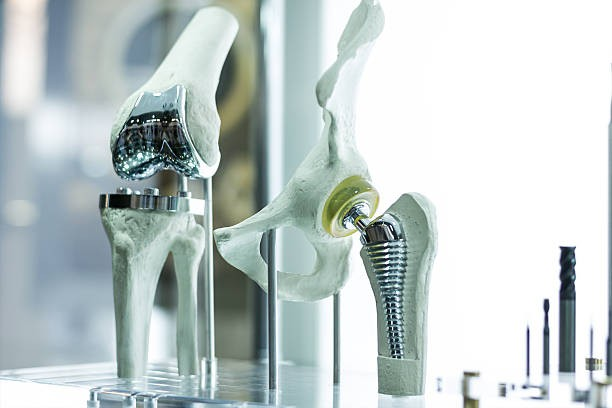
Hip, knee, shoulder, ankle, elbow, and other reconstructive systems can include titanium components depending on the device design.
Material selection may involve strength, fatigue behavior, corrosion resistance, surface requirements, geometry, and compatibility with other device materials. Bar, billet, plate, or forged stock may serve as starting material for different components.
Spinal Fixation
Spinal systems may include rods, screws, connectors, and plates. Ti-6Al-4V ELI is commonly associated with high-strength implant applications where tightly controlled chemistry and mechanical properties are required.
The exact specification should be stated by the manufacturer because a general industrial titanium standard should not be assumed to satisfy a surgical-implant requirement.
Dental Applications
Titanium is also used in dental implant systems and related components. Commercially pure titanium and titanium alloys may be selected depending on design, load, dimensions, and validated manufacturing requirements.
The final surface condition is especially important because implant surfaces may be prepared or modified to achieve specific functional goals.
Trauma and Fixation Components
Bone screws, trauma plates, and related fixation components can require strength, corrosion resistance, dimensional control, and dependable material documentation.
The starting material may be bar, plate, wire, or forging stock depending on the component and manufacturing route.
Which Standards Should Buyers Check?
Material standards provide a technical basis for procurement and acceptance. They establish minimum requirements, while a medical-device manufacturer may add further controls.
ASTM F67 for Unalloyed Titanium
ASTM F67 covers unalloyed titanium Grades 1 through 4 for surgical implant applications. It addresses chemical, mechanical, and metallurgical requirements for product forms including strip, sheet, plate, bar, billet, forgings, and wire.
This makes it an important reference when commercially pure titanium is specified for an implant component.
ASTM F136 for Ti-6Al-4V ELI
ASTM F136 covers wrought Ti-6Al-4V ELI for surgical implant applications. Buyers should verify that the certification, product form, condition, and test results match the exact purchase requirement.
The alloy name alone is not enough. Material should be ordered and accepted against the specification called out by the device manufacturer.
Avoid Automatic Substitution
Titanium is also produced to aerospace, industrial, plate, bar, and forging standards. Those materials may be high quality, but a commercial or aerospace specification should not automatically replace an implant specification simply because the nominal alloy appears similar.
Any substitution needs to follow the manufacturer’s engineering, quality, and regulatory controls.
Why Traceability Matters in Medical Titanium Supply
Medical manufacturing requires tight control of material identity. Heat or lot traceability connects stock to its certification, chemistry, mechanical properties, and original production records.
A qualified medical grade titanium supplier should be able to support the documentation requirements stated by the purchaser and maintain material identity through relevant handling and processing.
Mill Test Reports and Certification
Material certification allows the buyer to confirm that received stock corresponds to the required grade and standard. Depending on the program, documentation may include heat identity, chemistry, mechanical properties, product form, material condition, and test results.
These requirements should be agreed before production begins.
Processing Must Preserve Identity
Cutting, grinding, and other value-added processes can make raw material easier to use, but material identification must remain controlled.
When a larger piece is divided into smaller pieces, the traceability system should maintain the relationship between the processed material and its original certification.
How Product Form Affects Implant Manufacturing
Titanium for medical manufacturing may be supplied as bar, wire, sheet, plate, billet, or forging stock. Choosing the right starting form can reduce unnecessary processing and support better production efficiency.
Bar, Billet, Plate, and Sheet
Bar and billet are common starting forms for machined or forged components. Diameter, straightness, surface condition, machining allowance, and internal quality may matter.
Plate and sheet can be used where cutting, forming, or machining begins with flat stock. Thickness tolerance, surface condition, orientation, and specification should be defined before purchase.
Wire
Wire may be required for certain implant, fixation, or instrument components. Diameter, surface condition, mechanical properties, and the relevant standard are important purchasing considerations.
How Should Manufacturers Evaluate a Supplier?
Supplier qualification should extend beyond price and inventory. Medical manufacturers should assess specification control, traceability, certifications, quality systems, processing capabilities, technical communication, and experience supporting medical-material programs.
A global specialty metals distributor can be useful when manufacturers need titanium alongside stainless steel, cobalt-chrome, or other performance metals across more than one location. Each material, however, must still satisfy the exact program-specific requirement.
Questions to Ask Before Ordering
Before issuing a purchase order, buyers should confirm:
- Which exact titanium grade is required?
- Which ASTM or other medical specification applies?
- What product form and dimensions are needed?
- What material condition is specified?
- Which certifications and test reports are required?
- Is heat or lot traceability required?
- Will any cutting or processing be completed before delivery?
- Are customer-specific quality clauses or approvals involved?
Clear requirements reduce ambiguity and help prevent expensive material mismatches.
Managing a Global Medical-Metals Supply Chain
Medical-device manufacturers may operate machining, assembly, and supplier networks across multiple countries. Maintaining consistent material and documentation can become more difficult when each facility sources independently.
A global specialty metals distributor can help coordinate inventory, logistics, processing, and multiple performance-metal requirements across regions. This can be useful when a manufacturer needs titanium, stainless steel, cobalt-chrome, or other alloys within the same broader program.
Global reach does not replace technical control. Each facility should still receive material that matches the approved specification, drawing, purchase order, and quality requirements.
What Should Buyers Avoid?
One of the biggest sourcing mistakes is treating an alloy name as a complete specification.
Buyers should not assume that all Ti-6Al-4V is interchangeable, that standard Grade 5 automatically satisfies an implant requirement, or that the phrase “medical grade” alone is enough for purchasing.
They should also avoid treating biocompatibility as a property of raw metal alone. Finished device design, surface condition, processing, cleanliness, sterilization, and application-specific evaluation remain important.
Final Thoughts
Titanium has an important role in implant manufacturing because selected grades combine corrosion resistance, mechanical performance, relatively low density, and established medical use. Commercially pure Grades 1–4 and Ti-6Al-4V ELI are governed by standards that help manufacturers control material chemistry, properties, and identity.
Working with a qualified medical grade titanium supplier helps buyers focus on the correct grade, specification, product form, condition, and traceability. For manufacturers operating across multiple regions or purchasing several performance metals, a global specialty metals distributor can provide broader supply-chain support while the approved medical-device specification remains the controlling requirement.
