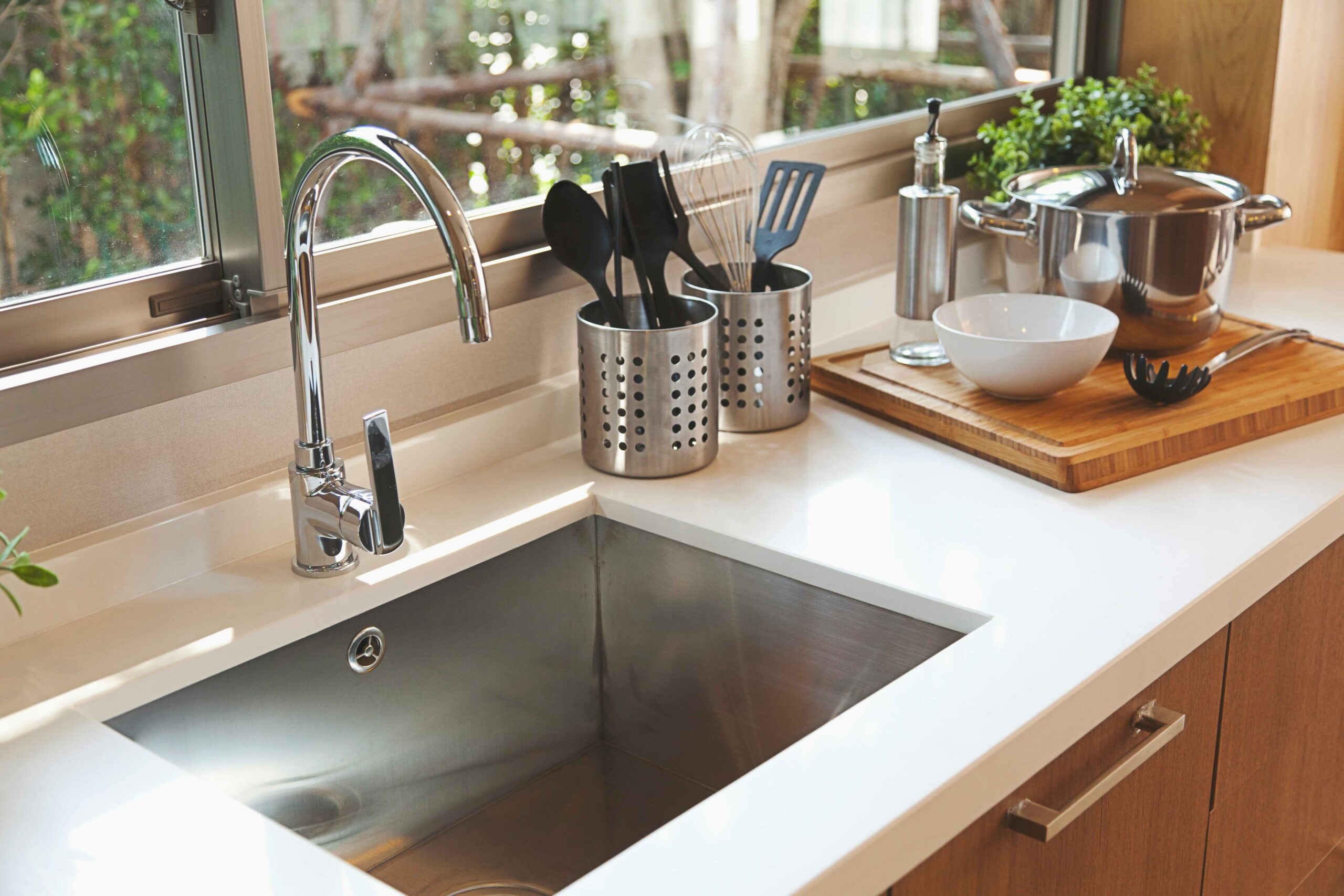
You’ve chosen high-end materials for your kitchen because you want durability and lasting beauty. Yet one of the most common threats to your investment isn’t visible on the surface; it’s hidden moisture from poor drainage that slowly undermines everything underneath. Over time, water that doesn’t drain correctly around your sink can seep into cabinetry and stone surfaces, leading to staining, warping, weakening, and even cracking that’s expensive to reverse.
By recognising the early warning signs and understanding how drainage issues work, you can protect your kitchen’s structure before irreversible damage occurs.
How Drainage Problems Start Small and Grow
Drainage issues rarely begin as dramatic leaks. Often, they start with something as subtle as a drain that doesn’t clear quickly, a waste pipe with insufficient downward slope, or a sink cutout that isn’t properly sealed around the edges. Each time you use the sink, small amounts of water can migrate into the gaps around the drain or underneath the benchtop.
These tiny exposures usually go unnoticed at first because most people clean visible spills quickly. However, water lingering underneath cabinetry or within porous sink surrounds doesn’t evaporate easily, especially where airflow is limited. Over weeks and months, this repeated moisture contact allows water to penetrate materials that aren’t designed to stay wet.
And before long, what started as a minor issue is quietly becoming a chronic drainage problem deep within the structure. Continuous dampness beneath surfaces also creates ideal conditions for mould or mildew and can even affect adjacent flooring and cabinetry over time.
Why Premium Surfaces Are Particularly Vulnerable
Luxury surfaces like marble benchtops in Sydney kitchens are beautiful, but they’re also inherently porous. Natural stone, such as marble or limestone, absorbs liquids and moisture if it’s not properly sealed and if water is consistently present.
Surface sealants can protect against spills on top, but they don’t prevent moisture rising from underneath if drainage is poor. Natural stone’s porosity means that repeated contact with water over long periods can lead to deep-seated staining or mineral deposits that won’t wipe away easily.
Prolonged moisture exposure doesn’t just affect appearance; it can weaken the stone’s structure. Moisture that soaks into the substrate can disrupt bonding agents between the stone and cabinetry, and can lead to micro-cracks and surface weakening that accelerates deterioration. This damage is much harder and more costly to fix than simply refinishing the top surface.
Signs Your Drainage Is Affecting Your Benchtops
Because drainage-related damage starts beneath the surface, the first signs are often subtle. Visible discolouration or dark patches around sink cutouts can indicate that water is penetrating the surface rather than draining away. A persistent damp or musty smell coming from beneath the sink is another red flag, suggesting moisture has become trapped in cabinetry or substrates.
If you notice soft or swollen cabinet panels, warped edges near the sink, or stains on the underside of the benchtop when inspecting behind cabinet panels, it’s likely that poor drainage has been affecting the materials for some time. In advanced cases, discoloured seams, peeling laminate or separation at joints signal that moisture has compromised structural elements.
Why This Isn’t a Surface Problem — It’s a Plumbing Problem
It’s tempting to treat staining or minor surface changes as a cosmetic issue; maybe the stone needs resealing or a polish. However, surface treatments alone won’t fix damage that originates from below. Water that continuously reaches beneath your benchtop does so because something in the drainage system isn’t working as it should. Whether it’s a partially blocked waste pipe, slow drainage, or a poorly sealed joint, the source of moisture needs to be addressed first.
Surface sealants protect only the top layer. They don’t stop water that travels up from below or through connections where the stone meets plumbing fixtures. Ignoring the plumbing aspect means the underlying cause remains active, and water continues to seep in, leading to recurring damage.
Getting the Drainage Assessed Properly
The correct way to tackle the problem is to have a qualified drainage plumber inspect your sink area and waste lines. These professionals can identify whether the issue stems from a blocked drain, an inadequate slope in the waste pipe, a leak in a joint, or a failed seal around the sink cutout.
They can also check for intermittent drips that may occur only when certain fixtures are used or when appliances like dishwashers are draining. A proper inspection often reveals issues that aren’t obvious during regular cleaning or quick visual checks.
For example, small drips from a loose fitting, hairline cracks in connections, or seepage around sink penetration points can keep materials damp without ever being visible from above. Early diagnosis and repair can stop ongoing moisture infiltration that would otherwise continue to degrade expensive surfaces over time.
Conclusion
Your investment in premium kitchen finishes deserves protection from more than just spills on the surface. Hidden drainage problems beneath your sink can expose cabinetry and benchtop materials to prolonged moisture contact, leading to staining, weakening and structural issues that are expensive to fix.
The key to preserving both the functionality and appearance of your kitchen surfaces is understanding that moisture underneath, not just on top, is often the real culprit. Regular inspection, prompt plumbing repairs by a reputable drainage plumber, and a holistic approach to moisture management help ensure your kitchen surfaces remain as beautiful and durable as you expected when you chose them.
FAQs
Can poor drainage really harm a stone benchtop?
Yes. Natural stone is porous and can absorb moisture over time, leading to staining, mineral deposits and weakening of the material if drainage issues allow water to collect beneath surfaces.
Why do I see discolouration near my sink but nowhere else?
Water is most concentrated around the sink area, and if drainage isn’t optimal, moisture can migrate beneath the surface, creating darker patches that don’t respond to normal cleaning.
Will sealing the surface stop underlying water damage?
No. Sealing protects the top surface from spills but doesn’t prevent water from rising through gaps or poor drainage pathways beneath the benchtop.
What’s the earliest sign of a hidden drainage problem?
A musty smell, soft cabinetry panels, or slight warping beneath the sink usually precede visible surface staining and indicate moisture issues below.