
If you want to understand the health of a regional economy, look at the cranes.
Across much of Western Europe, the construction sector is currently navigating severe headwinds. Supply chain inflation, stringent new ESG compliance mandates, staggering land acquisition costs, and complex bureaucratic zoning laws have paralyzed residential and commercial development pipelines. For capital allocators and property investors operating out of hubs like Amsterdam, Berlin, and London, the business of building has become prohibitively expensive and frustratingly slow.
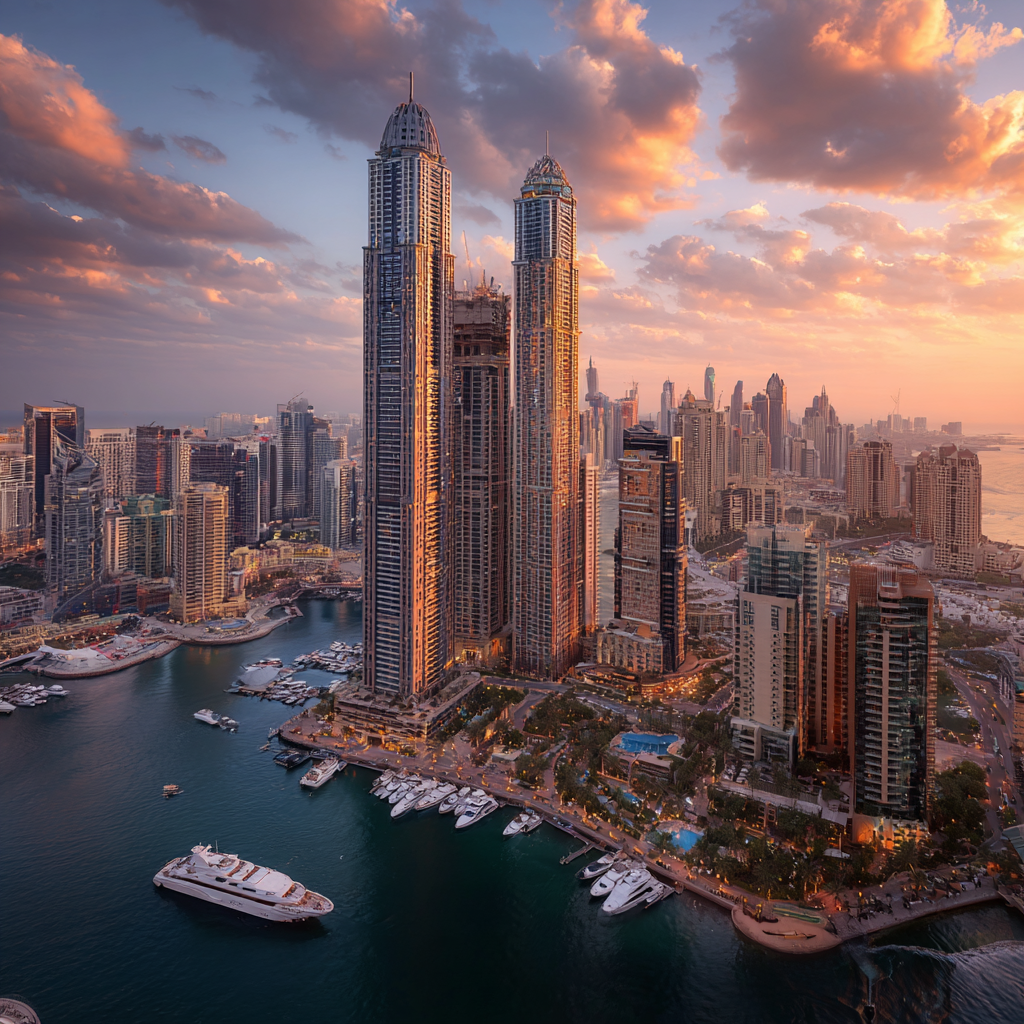
Contrast this with the skyline of the United Arab Emirates. Dubai is executing urban expansion at a scale and velocity that has essentially no parallel in the modern Western world.
However, the influx of European capital into the emirate is not driven by the mere spectacle of construction. It is driven by the underlying business mechanics of the market. European investors, family offices, and private wealth managers are pouring billions into Dubai off-plan real estate because the regulatory framework and financial structuring of these developments offer a blueprint for yield that Europe can no longer provide.
Here is a closer look at the development economics and business strategies fueling this cross-border capital migration.
The Economics of the Master Plan
To understand the business appeal of Dubai, one must understand how the city actually builds. Unlike older European cities constrained by historical infrastructure and fragmented land ownership, Dubai operates on a strategy of “master-planned communities.”
When a master developer breaks ground, they are not simply erecting a residential tower on an empty plot. They are constructing a micro-economy. These massive urban tracts are designed simultaneously with heavy infrastructure—roads, power grids, retail centers, international schools, and healthcare facilities.
From an investment standpoint, this integrated approach is highly lucrative. Buying an off-plan asset in the early stages of a master-planned community means you are acquiring property before the surrounding infrastructure has fully matured. As the commercial elements of the neighborhood come online—as the cafes open, the schools accept students, and the transport links connect—the baseline value of the residential real estate is driven upward. It is a predictable, structured curve of capital appreciation that business investors can confidently model.
Restructuring Leverage: The Off-Plan Payment Model
In traditional European real estate, leverage is almost exclusively the domain of the banking sector. An investor secures a mortgage, accepts the interest rate, and the bank assumes a primary position on the asset. In an era of elevated global interest rates, this model severely cuts into an investor’s net operating income.
The business model of Dubai off-plan real estate bypasses traditional banking leverage entirely.
Developers utilize structured payment plans to fund construction directly through the buyers. An investor can secure a premium asset by committing a relatively small percentage of capital upfront—typically 15% to 20%. The remaining financial commitment is distributed over the construction lifecycle, which generally spans two to four years, with a significant final payment tied directly to the handover of the keys.
For European capital allocators, this is an exercise in exceptional capital efficiency. You lock in the acquisition cost of the asset on day one, avoiding future inflation on construction materials. Meanwhile, the bulk of your capital remains liquid, allowing you to deploy it into other revenue-generating operations while the property is being built. By the time the asset is completed, the investor captures the appreciation on the total value of the property, utilizing zero-interest leverage provided directly by the developer.
Institutionalizing Trust: The Regulatory Firewall
A common hesitation for corporate investors entering emerging markets is the risk of developer default. What happens to the capital if a construction project stalls?
Over the past decade, the Dubai government has methodically transformed its property market from a frontier economy into an institutionally regulated environment. The Real Estate Regulatory Agency (RERA) and the Dubai Land Department (DLD) have established a firewall between developer operations and investor capital through strict escrow laws.
When an investor purchases off-plan real estate in Dubai, their capital is not deposited into the developer’s corporate bank account. It is deposited into an independent, government-monitored escrow account. The developer can only draw down these funds to pay contractors as specific, independently audited construction milestones are achieved.
This regulatory mechanism protects foreign capital and ensures that funds are used exclusively for the construction of the specific asset purchased. It is a level of business security that has given European institutional and private wealth the confidence to deploy capital at scale.
The Tax-Free Yield Engine
The ultimate metric for any real estate investment is the net yield. The fiscal environment in Europe is increasingly hostile to property owners, with heavy taxation applied to both rental income and capital gains.
Dubai operates as a zero-income-tax jurisdiction. When an off-plan property is completed and enters the rental market, it typically generates a gross yield of 6% to 9%. Because there is no state income tax applied to those earnings, and no capital gains tax upon the eventual sale of the asset, the gross yield essentially mirrors the net yield.
When corporate wealth managers compare the after-tax ROI of a commercial or residential asset in the Netherlands against a similar asset in the UAE, the mathematical gap is staggering. The tax efficiency of Dubai fundamentally alters the timeline for capital recovery and profit generation.
Execution and Fiduciary Strategy
While the macroeconomic environment in Dubai is highly favorable, the market is vast and complex. There is a massive variance in the quality of developers, the viability of specific locations, and the intricacies of sales contracts.
European business capital cannot successfully navigate this landscape based on developer marketing materials alone. Precision execution requires on-the-ground intelligence and a fiduciary partner who understands the rigorous compliance and reporting standards of European investors.
This requirement has elevated the role of specialized advisory firms. Companies such as AION Dubai function as the vital link between European capital and UAE development. They provide the necessary friction to the buying process—conducting deep due diligence on developer financials, analyzing historical delivery data, and identifying the specific services and off-plan assets that align with a corporate investor’s long-term strategy.
The Development Horizon
The global business of real estate is shifting. As construction pipelines in traditional Western hubs face mounting economic and regulatory pressure, capital will inevitably flow toward markets that are actually building.
Dubai’s off-plan sector is not merely a boomtown phenomenon; it is a carefully architected financial ecosystem designed to attract, protect, and multiply foreign capital. For European investors looking to secure high-yield assets, leverage capital efficiently, and operate in a tax-optimized environment, the UAE is no longer an alternative market. It is the primary blueprint for future growth.
FAQ
Q1: How do escrow accounts protect business capital in Dubai? Escrow laws require that all payments made toward off-plan properties are held in a secure, government-approved bank account. The developer cannot use these funds for marketing or other projects; they can only access the money incrementally as they prove physical construction progress, effectively eliminating the risk of capital mismanagement.
Q2: Can foreign corporations purchase off-plan real estate in Dubai? Yes. Foreign companies are permitted to buy freehold property in designated areas. Many corporate investors set up local Free Zone entities or offshore holding companies (such as in JAFZA) to acquire and manage their UAE real estate portfolios efficiently.
Q3: What happens to the property value when a master-planned community is finished? Historically, property values within master-planned communities experience significant appreciation upon completion. As the surrounding infrastructure (retail, schools, transport) becomes fully operational, tenant demand spikes, driving up both rental yields and the capital value of the real estate.
Q4: Are there hidden taxes for foreign buyers? No. Dubai is known for its fiscal transparency. The primary fee is a one-time 4% property registration fee paid to the Dubai Land Department. There are no hidden annual property taxes, wealth taxes, or capital gains taxes.
